
Author: Dr. Anton Moskalenko, DDS
Parkside Dental — Brooklyn, NY
Did you know the secret to a pain-free wisdom tooth recovery starts before the surgery? Most patients worry about the ‘after,’ but at ParkSide Dental, Dr. Moskalenko uses 3D Nerve Mapping to cut trauma by up to 50% before we even begin. Here is your Brooklyn-exclusive blueprint to a faster, smoother, and safer healing journey.”
Key Takeaways: Your Guide to a Smoother Recovery
- Precision = Less Pain: Thanks to Dr. Moskalenko’s 3D mapping, your surgery is more precise, leading to a faster, less painful recovery.
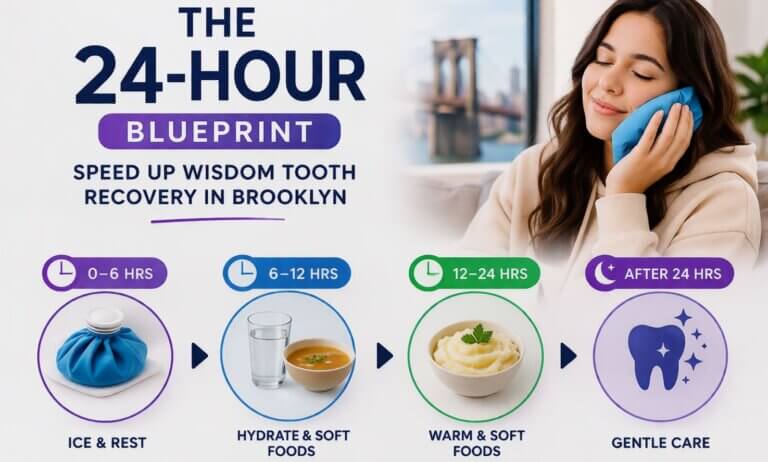
- The First 24 Hours are Crucial: Follow our simple steps to control bleeding, reduce swelling, and manage discomfort.
- Avoid Dry Socket: Learn the essential do’s and don’ts to protect your healing clot, especially when it comes to straws and smoking.
- Nutrition Matters: Our Brooklyn-friendly guide to soft, nutrient-rich foods that aid healing.
Beyond the Surgery: Your Roadmap to a Rapid Recovery
You’ve made the smart choice to have your wisdom teeth removed with the precision of 3D nerve mapping at ParkSide Dental. Dr. Anton Moskalenko’s advanced planning significantly reduces trauma during the procedure, setting you up for a much smoother recovery than traditional methods allow.
However, a big part of that smooth healing process happens right here, at home, in the first 24 to 48 hours. I often tell my Brooklyn patients that, while we provide the best surgical experience, your proactive care is the key to a quick recovery. This blueprint will guide you through exactly what to do to minimize discomfort and speed up your return to normal.
The Golden Rules for the First 24 Hours: Managing Bleeding & Swelling
The moment you leave our office, your body begins the healing process. Here’s what you need to focus on immediately:
1. Bleeding Control (The Gauze Trick)
- What to do: Bite down firmly on the gauze packs we give you for 30-45 minutes at a time. The pressure is what stops the bleeding.
- Why it works: This creates a stable blood clot, which is the foundation for healing.
- When to change: If the gauze is saturated, replace it with fresh gauze. You might need to do this a few times. Slight oozing is normal; heavy bleeding is not (call us immediately).
2. Swelling Reduction (The Ice Pack Protocol)
- What to do: Apply an ice pack to the outside of your face, over the surgical area, for 20 minutes on, 20 minutes off.
- Why it works: Ice constricts blood vessels, reducing inflammation and bruising.
- Timeline: Do this consistently for the first 24 hours. After that, ice is less effective, and you can switch to warm compresses if desired.
3. Pain Management (Stay Ahead of It!)
- What to do: Start your prescribed pain medication as directed, even if you don’t feel pain yet.
- Why it works: It’s much easier to prevent pain from becoming severe than it is to get it under control once it’s intense.
- Pro-Tip: Over-the-counter anti-inflammatories like Ibuprofen (Advil/Motrin) can be very effective in conjunction with stronger pain relievers, but always follow Dr. Moskalenko’s specific instructions.
4. Rest & Elevation (Your Body’s Best Healer)
- What to do: Go home and rest. Elevate your head with an extra pillow for the first 24-48 hours.
- Why it works: Rest helps your body conserve energy for healing. Elevating your head reduces blood flow to the surgical site, minimizing swelling.
Avoiding the Dreaded “Dry Socket” (Alveolar Osteitis)
This is the biggest complication patients worry about, and for good reason—it’s quite painful. A dry socket occurs when the blood clot that forms at the extraction site dissolves or becomes dislodged, exposing the underlying bone and nerves.
Crucial “DO NOTS” for the First 3-5 Days:
- NO Straws: The suction can dislodge the clot.
- NO Smoking/Vaping: The sucking motion and chemicals are highly detrimental to healing.
- NO Spitting/Rinsing Forcefully: Gently let liquid fall out of your mouth instead of spitting.
- NO Alcohol: It can interfere with medication and healing.
- NO Touching the Site: Keep fingers and tongue away from the healing area.
What to DO for Prevention:
- Gentle Rinsing: After 24 hours, you can gently rinse with warm salt water (1/2 tsp salt in 8 oz warm water) after meals. Just let it gently “swish” and fall out.
Your Brooklyn-Friendly Soft Food Guide
Eating properly is vital for energy and healing, but it needs to be gentle on your surgical sites. Here’s a quick list of what to stock up on:
| DO Eat (Soft & Soothing) | AVOID (Hard, Sticky, Acidic) |
| Yogurt, Smoothies (no straw!) | Crunchy chips, nuts, popcorn (can get stuck) |
| Applesauce, Mashed Potatoes, Scrambled Eggs | Acidic fruits (oranges, tomatoes) or juices |
| Broth-based Soups (lukewarm, no small pieces) | Chewy meats, sticky candy, granola bars |
| Lukewarm Oatmeal/Grits | Very hot or very cold foods (can cause sensitivity) |
| Soft Pasta, well-cooked fish | Spicy foods |
| Protein Shakes (no straw) | Alcohol, soda (can irritate the site) |
The Healing Timeline: What to Expect
- Days 1-2: Peak swelling and mild discomfort. Focus on rest, ice, and medication.
- Days 3-5: Swelling starts to subside. You can begin more gentle activities. Continue soft foods.
- Day 7: You’ll likely feel significantly better. We may schedule a follow-up to check healing.
- Weeks 1-2: Most external discomfort gone. Internal bone healing continues for several weeks.
Seamless Recovery Starts with Precision Planning
A smooth recovery actually begins before the surgery itself. Because Dr. Moskalenko uses 3D Nerve Mapping to plan your wisdom tooth extraction, your tissues experience less trauma. This precision is the #1 secret to significantly reducing post-operative swelling and discomfort, making your at-home care even more effective.
Questions or Concerns? We’re Here For You!
Your comfort and swift recovery are our top priorities. If you experience unusual pain, excessive bleeding, or a fever, please don’t hesitate to call ParkSide Dental immediately.
- Location: 325 Ocean Ave, Brooklyn, NY 11225
- Phone: (718) 462-7436
Medical Disclaimer
This content is for informational purposes only and does not constitute medical advice. Following post-operative instructions is critical for a smooth recovery. Always follow Dr. Moskalenko’s specific instructions for your individual case, as they may vary.
Useful Links:
- 3D Nerve Mapping: How Dr. Moskalenko Uses Advanced CBCT Technology
- Severe Toothache: What to Do if You Have Intense Tooth Pain
- Immediate Steps to Take If Your Filling Falls Out: Expert Advice from ParkSide Dental
- Why Dr. Anton Moskalenko is the Top-Rated Choice for Your Root Canal
- Who is the Top Brooklyn Cosmetic Dentist in NYC?
- Dental Implants vs. Bridges: Which Restoration is Right for Your Smile in 2026?
- Damage or Lose a Dental Crown? Here’s What You Should Do
- Rediscovering Your Smile: Understanding Partial Dentures
- Do I Have a Tooth Infection? Symptoms and Treatment Options
- Who Should NOT Get Snap-On Veneers?
- Can You Make a Dental Flipper for One Tooth? – Pros and Cons of Single-Tooth Flippers