

Author: Dr. Anton Moskalenko, DDS
Parkside Dental — Brooklyn, NY
The 3-3-3 rule for toothaches is a specific, short-term pain management strategy that involves taking 600 mg of ibuprofen (typically three 200 mg over-the-counter tablets) three times a day for no more than three days. This protocol is clinically designed to maintain a consistent therapeutic level of anti-inflammatory medication in the bloodstream to combat the localized swelling that causes most acute dental pain. By creating a steady “titer” or concentration of the drug, the 3-3-3 rule acts as a vital clinical bridge, providing temporary relief and reducing internal pressure within the tooth’s nerve or surrounding periodontal ligaments until a dentist can perform a formal diagnosis. While highly effective for symptom management, it is essential to understand that this is not a cure for underlying bacterial infection or structural decay; it is a temporary stabilization measure while awaiting professional intervention.
Key Takeaways
- 🟢 The 3-3-3 rule uses consistent dosing to maintain anti-inflammatory levels in the body.
- 🟢 This method targets the underlying swelling that causes intense, throbbing tooth pain.
- 🟢 It is a short-term bridge meant to last no more than three days total.
- 🟢 Professional dental care is still required to treat the actual bacterial cause of pain.
What is the 3-3-3 Rule?
The 3-3-3 rule is a structured pharmacological approach to managing “flare-ups” in the oral cavity. Most patients instinctively take pain relievers only when they feel pain, leading to a “breakthrough pain” cycle where the medication wears off, the inflammation returns, and the patient suffers for hours waiting for the next dose to kick in. The 3-3-3 rule shifts the focus from reactive pain relief to proactive inflammation control.
By adhering to a strict schedule of 600 mg every eight hours, the body is never without the anti-inflammatory support it needs to keep the pulp’s swelling suppressed. This is particularly effective for toothaches because dental pain is almost exclusively driven by pressure rather than a simple surface injury.
Why it Happens
To understand why the 3-3-3 rule works, one must understand the unique anatomy of a tooth. Unlike a cut on your skin, which can swell outward into the air, the soft tissue inside your tooth (the dental pulp) is encased in the hardest substance in the human body: enamel. When the pulp becomes irritated, the body sends more blood to the area to fight the threat. However, because the tooth cannot expand, that extra blood flow creates massive internal pressure. This pressure crushes the nerves and blood vessels inside the tooth, resulting in the sharp, pulsing, and debilitating pain that defines a dental emergency.
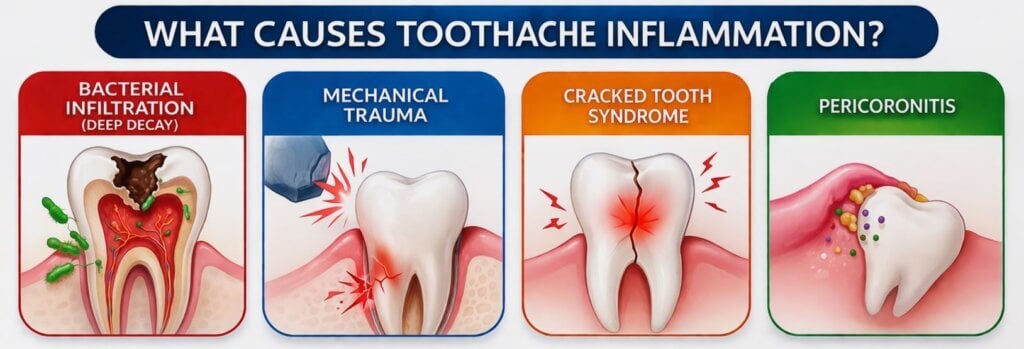
What Causes Toothache Inflammation?
Inflammation in the mouth is the body’s defensive response to an invader or injury. At ParkSide Dental, we frequently see several common catalysts for this painful response.
- Bacterial Infiltration (Deep Decay): When a cavity is left untreated, it eventually bores through the protective enamel and dentin layers. Once bacteria enter the sterile pulp chamber, they release toxins that trigger a massive inflammatory response.
- Mechanical Trauma: A sudden blow to the face or biting down on an unexpectedly hard object (like a popcorn kernel) can bruise the periodontal ligament—the “shock absorber” that holds your tooth in the jaw.
- Cracked Tooth Syndrome: Micro-fractures allow the tooth to flex slightly when biting. This flex irritates the internal nerve, leading to sharp, sudden stabs of pain followed by a dull, throbbing ache.
- Pericoronitis: This is common with erupting wisdom teeth. Food and bacteria get trapped under a flap of gum tissue, causing the tissue to swell and potentially leading to a localized infection.
How it Develops
The development of a toothache usually follows a predictable biological path. It often starts as “reversible pulpitis,” where the tooth is sensitive to temperature but the nerve is still healthy enough to recover if the irritant is removed. If the 3-3-3 rule is used here alongside professional care, the tooth can often be saved with a simple filling. If ignored, it progresses to “irreversible pulpitis.” At this stage, the nerve is dying and cannot be saved. This is where the 3-3-3 rule becomes a critical tool to help a patient survive the 24–48 hours before an emergency root canal can be performed.
Symptoms and Signs of Dental Inflammation
Recognizing the type of pain you are experiencing helps Dr. Moskalenko determine the best course of action. Not all toothaches are created equal.
- Pulsing or Throbbing: This is the hallmark of pulpal inflammation. It often matches your pulse because the pressure increases every time your heart beats.
- Sensitivity to Heat: Heat causes gas and fluids inside the tooth to expand, further increasing pressure. If heat causes pain and cold provides temporary relief, the nerve is likely dying.
- Postural Pain: If your tooth hurts more when you lie down, it is because the blood pressure in your head increases in a horizontal position, further aggravating the inflamed pulp.
- Tenderness to Touch: This usually indicates the inflammation has spread past the tooth and into the surrounding bone and ligaments.
How Doctors Recognize it
When you arrive at our Brooklyn clinic, we use several diagnostic layers. First, we perform a visual and physical exam. We check for “fistulas” (pimple-like bumps on the gums), which indicate a draining infection. We then move to thermal testing to see how the nerve reacts to cold. Finally, we utilize 3D CBCT Imaging. Unlike standard X-rays, 3D scans allow us to see the exact shape of the root canals and identify “silent” infections in the jawbone that haven’t yet caused visible swelling.

Treatment and Prevention: Clinical Approaches
The 3-3-3 rule is the “first aid” of dentistry, but clinical treatment is the “surgery.” At ParkSide Dental, we focus on removing the source of the problem.
- Pulpectomy: For a severe toothache, we perform a pulpectomy. This involves making a small opening in the tooth and removing the inflamed or dead nerve tissue. This provides almost instant relief because the pressure is released.
- I&D (Incision and Drainage): If the infection has caused a visible swelling in the gums, we gently drain the area to remove the pus and bacteria, immediately reducing the throbbing sensation.
- Occlusal Adjustment: Sometimes a tooth is simply “too high” in the bite, causing it to take too much force. We can microscopically shave the surface to allow the ligament to heal.
- Safety Protocols: It is vital to remember that Ibuprofen is a blood thinner. If you have a planned surgery or a history of gastrointestinal issues, you must consult with us before starting the 3-3-3 regimen.
When to See a Doctor
The 3-3-3 rule has a maximum duration of 72 hours. If the pain persists beyond this window, the inflammation has likely progressed to a full-scale infection or abscess. You should seek immediate emergency care if you notice facial swelling that spreads toward the eye or down the neck, a high fever, or difficulty opening your mouth. These are signs of a spreading infection (cellulitis) that can become life-threatening if it enters the bloodstream or obstructs the airway.
Questions or Concerns? We’re Here For You!
Your comfort and swift recovery are our top priorities. If you experience unusual pain, excessive bleeding, or a fever, please don’t hesitate to call ParkSide Dental immediately.
Location: 325 Ocean Ave, Brooklyn, NY 11225 Phone: (718) 462-7436
FAQ Section
Meet Your Brooklyn Dental Expert: Dr. Anton Moskalenko, DDS
Dr. Anton Moskalenko is the lead clinician at ParkSide Dental Center, bringing over 18 years of clinical expertise to the Brooklyn community. Known for his meticulous approach to restorative and cosmetic dentistry, Dr. Moskalenko has earned a 4.9-star reputation for his gentle touch and clear, patient-focused communication.
At ParkSide Dental, we combine modern technology with a compassionate, non-judgmental environment. Whether you require a routine cleaning or complex surgical care, our team is dedicated to providing high-quality dentistry that is both advanced and accessible.
Our Core Specialized Services:
- Restorative: Dental Implants, Crowns, Bridges, and Premium Dentures.
- Cosmetic: Invisalign®, Porcelain Veneers, and Clinical-Grade Whitening.
- Surgical: Wisdom Tooth Extractions and Emergency Dental Care.
Disclaimer: This article is for informational purposes only and does not substitute for professional medical advice. Always consult your dentist or physician before starting a new medication regimen.