
Author: Dr. Anton Moskalenko, DDS
Parkside Dental — Brooklyn, NY
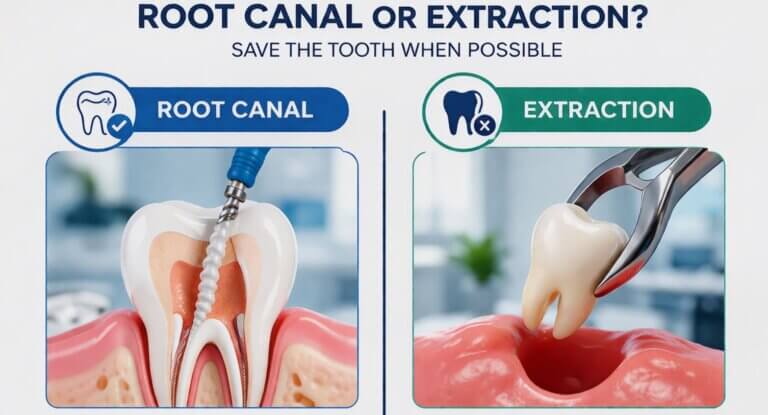
The Ultimate Dental Dilemma Do you save a “bad” tooth with a root canal or just pull it and be done? Before you choose the “easy” way out, you need to see what happens to your jawbone just 12 months after an extraction.
At ParkSide Dental, we use advanced 3D imaging to give you a definitive answer on whether your tooth is a “save” or a “start-over.” Discover the hidden costs of extractions and why your natural tooth remains the best technology in the room.
Saving vs. Starting Over
The decision to save a natural tooth via root canal therapy versus proceeding with an extraction depends on three main factors:
- Structural Integrity: Is there enough tooth left to support a crown?
- Infection Extent: Has the infection reached the bone?
- Long-term Goals: Are you prepared for the maintenance of a prosthetic replacement?
In modern dentistry, preserving the natural tooth is almost always the preferred clinical outcome. It maintains your jaw’s structural alignment, prevents bone resorption (deterioration), and avoids the higher long-term costs of implants.
The Verdict: While a root canal is a proactive investment in your anatomy, an extraction is a final resort—reserved for teeth fractured below the gum line or those with compromised bone support.
Key Takeaways
- 🟢 Natural Preservation: Saving your tooth prevents surrounding teeth from shifting.
- 🟢 Bone Health: A natural root stimulates the jawbone, preventing facial sagging.
- 🟢 Cost Efficiency: A root canal avoids the expensive, multi-stage cost of implants.
- 🟢 Bite Force: No prosthetic matches the natural strength of your original tooth.
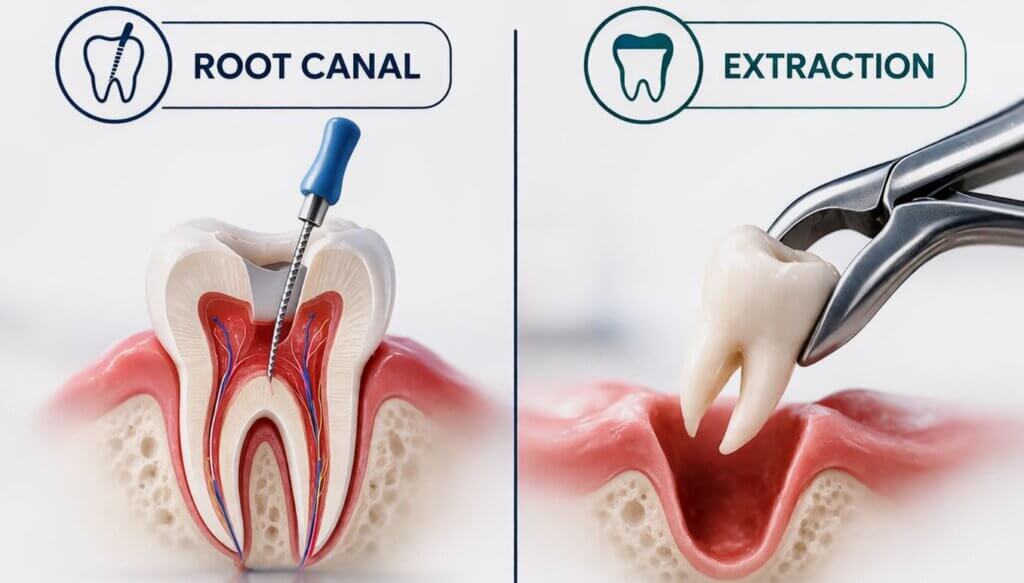
What is the Difference Between Extraction and Root Canal?
A root canal is a restorative procedure where Dr. Moskalenko removes infected internal pulp, disinfects the canals, and seals the tooth to keep it functional. Conversely, an extraction is the complete removal of the tooth and its root from the socket.
In cases of extreme, emergency pain, Dr. Moskalenko may first perform a Pulpectomy—a procedure that focuses on immediate pain relief by removing the nerve tissue before the full root canal is completed. Understanding the Difference between a Pulpectomy and a Root Canal is key to managing dental emergencies effectively.
What Causes the Need for This Decision?
Several clinical factors determine which path is most viable for your oral health:
- Extensive Decay: If a cavity has destroyed so much structure that a crown cannot be supported.
- Vertical Root Fractures: If a crack extends vertically into the root, the tooth cannot be saved.
- Periodontal Disease: If the bone and gums are too weak to hold the tooth.
- Failed Previous Treatment: In rare cases, a previous root canal can become re-infected.
How it Develops
The situation usually begins with a small cavity. Our goal at ParkSide Dental is always to help you Avoid Root Canals and Fillings through consistent Preventive Dental Care. However, if decay enters the pulp, the pain shifts to a constant throb. If an abscess forms, the pressure can dissolve surrounding bone, leaning the diagnosis toward an extraction.
Symptoms and Signs: How Doctors Recognize the Best Option
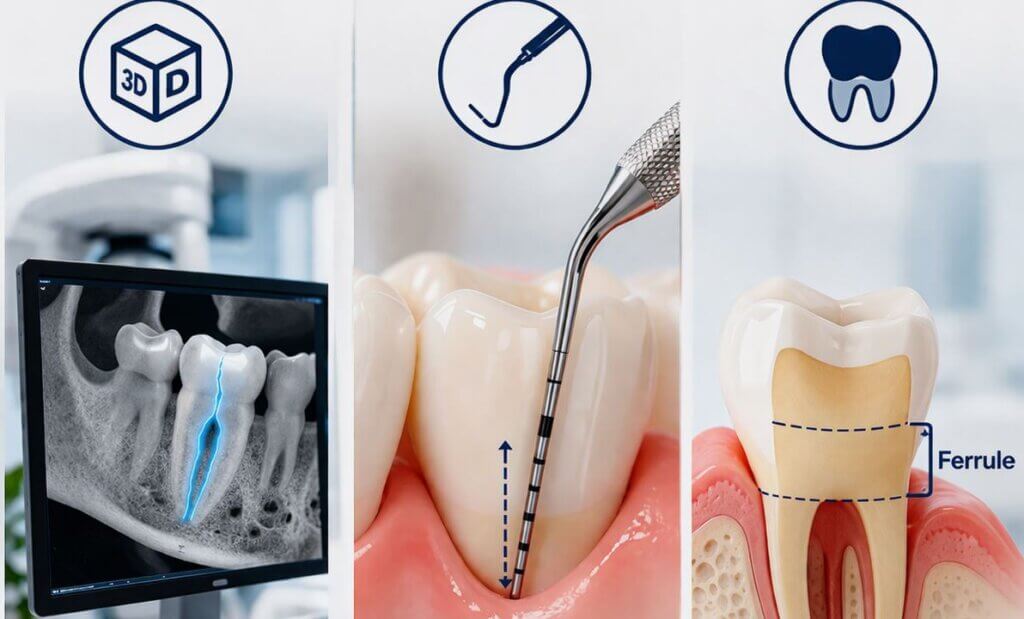
During your exam at ParkSide Dental, Dr. Moskalenko uses advanced diagnostics to evaluate the “save-ability” of your tooth:
- 3D CBCT Imaging: High-definition 3D scans to see fractures that 2D X-rays miss.
- Probing Depths: Measuring the “pocket” around the tooth to identify hidden fractures.
- Structural Assessment: Looking for the “ferrule”—the healthy tooth structure remaining to hold a protective crown.
Treatment and Prevention: Clinical Approaches
The Root Canal Path
If the tooth is salvageable, we perform endodontic therapy using 3D Nerve Mapping. After the canal is sealed, a custom porcelain crown is placed to protect the tooth from future fractures.
The Extraction Path
If the tooth must be pulled, we prioritize Socket Preservation. This involves placing a bone graft into the empty socket immediately after extraction. This “holds the space” for a future dental implant, ensuring your jawbone doesn’t thin out.
When to See a Doctor
Seek a consultation the moment you feel lingering pain to heat or cold. The longer you wait, the more tooth structure is lost to bacteria. If you are hesitant about the procedure due to misinformation online, we recommend Debunking Myths: Root Canals and Cancer to see why this is a safe, routine treatment.
Questions or Concerns? We’re Here For You!
Your comfort and swift recovery are our top priorities. If you experience unusual pain, excessive bleeding, or a fever, please don’t hesitate to call ParkSide Dental immediately.
Location: 325 Ocean Ave, Brooklyn, NY 11225 Phone: (718) 462-7436
FAQ Section
Meet Your Brooklyn Dental Expert: Dr. Anton Moskalenko, DDS
Dr. Anton Moskalenko is the lead clinician at ParkSide Dental Center, bringing over 18 years of clinical expertise to the Brooklyn community. Known for his meticulous approach to restorative and cosmetic dentistry, Dr. Moskalenko has earned a 4.9-star reputation for his gentle touch and clear, patient-focused communication.
At ParkSide Dental, we combine modern technology with a compassionate, non-judgmental environment. Whether you require a routine cleaning or complex surgical care, our team is dedicated to providing high-quality dentistry that is both advanced and accessible.
Our Core Specialized Services:
- Restorative: Dental Implants, Crowns, Bridges, and Premium Dentures.
- Cosmetic: Invisalign®, Porcelain Veneers, and Clinical-Grade Whitening.
- Surgical: Wisdom Tooth Extractions and Emergency Dental Care.
Disclaimer: This article is for informational purposes only and does not substitute for professional medical advice. Always consult your dentist or physician before starting a new medication regimen.