Long-Term Missing Tooth
Bone can gradually shrink after a tooth has been missing for months or years.


Not every dental implant patient needs bone grafting. But when the jawbone is too thin or has lost volume after a missing tooth, infection or periodontal damage, bone grafting may help rebuild the site and create a stronger foundation for future implant treatment.
ParkSide Dental provides bone grafting evaluation and treatment in Brooklyn with Dr. Anton Moskalenko, DDS. Our office is located at 325 Ocean Ave, Brooklyn, NY 11225. English, Spanish, Russian and Ukrainian are spoken.
Bone grafting is used when there is not enough healthy jawbone to support the planned dental implant or when preserving bone after an extraction may improve future treatment options.
Some patients can receive an implant without grafting, while others may need a graft before implant placement or at the same time as another procedure. The decision depends on the amount and location of available bone, the implant plan and the condition of the surrounding tissues.
Dental implants need enough bone in the correct location to remain stable.
A dental implant is placed into the jawbone. If the planned site does not have enough height, width or density of bone, grafting may be recommended to improve the foundation for implant placement.
The goal is not simply to add bone. The graft must support the specific implant position and restorative plan being considered for that patient.
For complete implant information, visit our Dental Implants in Brooklyn page.
Bone grafting is considered when the implant site needs additional support.
Bone can gradually shrink after a tooth has been missing for months or years.
Bone preservation or grafting may be considered when a tooth is removed and future implant treatment is planned.
Gum disease can reduce the amount of bone available around teeth and future implant sites.
Previous infection, cysts, fractures or other damage can leave an area with reduced bone volume.
The bone around a tooth changes after the tooth is removed or lost.
Natural tooth roots transmit forces into the surrounding jawbone. After a tooth is lost, the ridge can gradually change shape and volume because the bone is no longer supporting that tooth.
The amount of change varies by patient and location. That is one reason implant planning may be easier soon after tooth loss than after many years, although delayed implant treatment can still be possible.
The graft material chosen depends on the clinical situation and treatment plan.
Bone taken from the patient’s own body. The source and need for a donor site depend on the procedure.
Processed human donor bone used as a grafting material in selected dental procedures.
Processed graft material derived from another species, commonly bovine-based material.
Synthetic grafting material designed to support bone formation in the treatment area.
The dentist determines which material and technique are appropriate for the specific graft site.
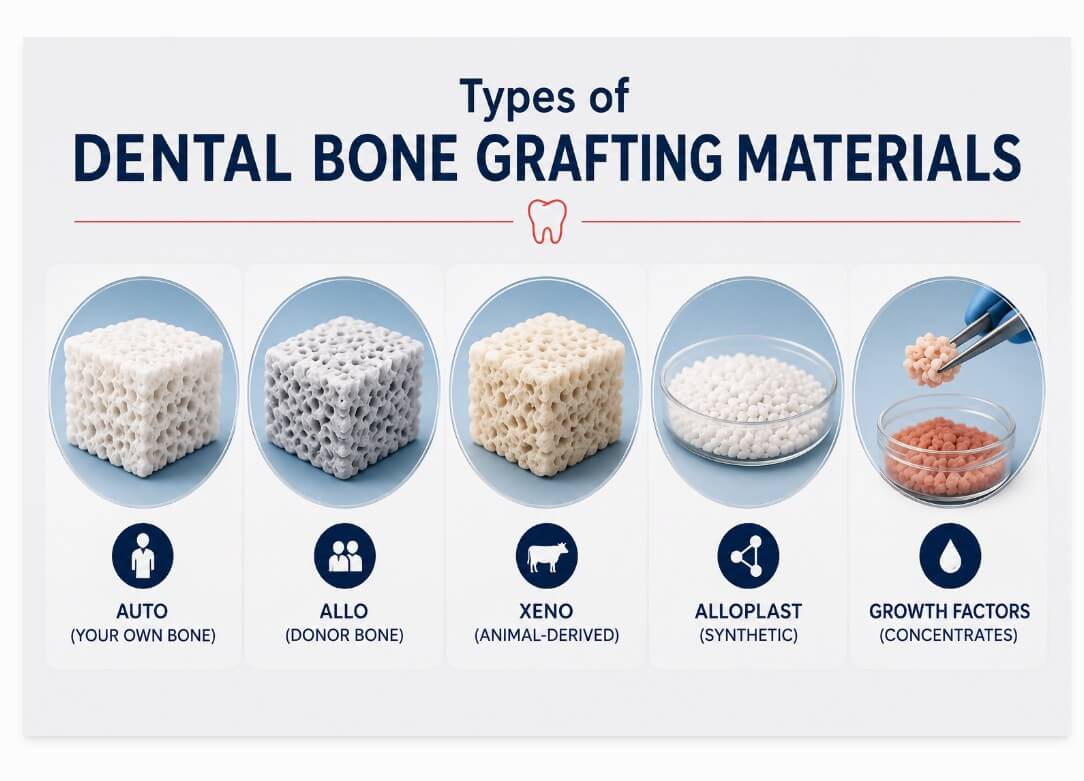
Common dental bone grafting materials used for implant treatment at ParkSide Dental in Brooklyn, NY.
Grafting and implant placement do not always need to happen in separate stages.
When the site needs significant bone development, the graft may be allowed to heal before the implant is placed.
Smaller deficiencies may sometimes be grafted at the same time as implant placement when sufficient primary implant stability can be achieved.
The timing is determined after clinical examination and imaging of the implant site.
The procedure depends on the size, location and purpose of the graft.
The dentist evaluates the missing-tooth area, jawbone and surrounding structures.
The treatment area is numbed before the surgical procedure begins.
Grafting material is placed in the planned area according to the implant and restorative treatment goals.
The site is allowed to heal while new bone develops around and through the grafted area.
“Bone grafting is not automatically part of every implant case. We first need to know exactly where the implant should go and whether the existing bone can support that plan.”— Dr. Anton Moskalenko, DDS
The gums may feel better relatively quickly, while bone integration takes much longer.
Swelling, tenderness and mild bruising can occur after grafting.
Soft-tissue healing usually progresses while the deeper graft continues to integrate.
The graft gradually becomes incorporated into the treatment site as bone develops.
Imaging and clinical evaluation help determine when the graft has healed enough for the next stage.
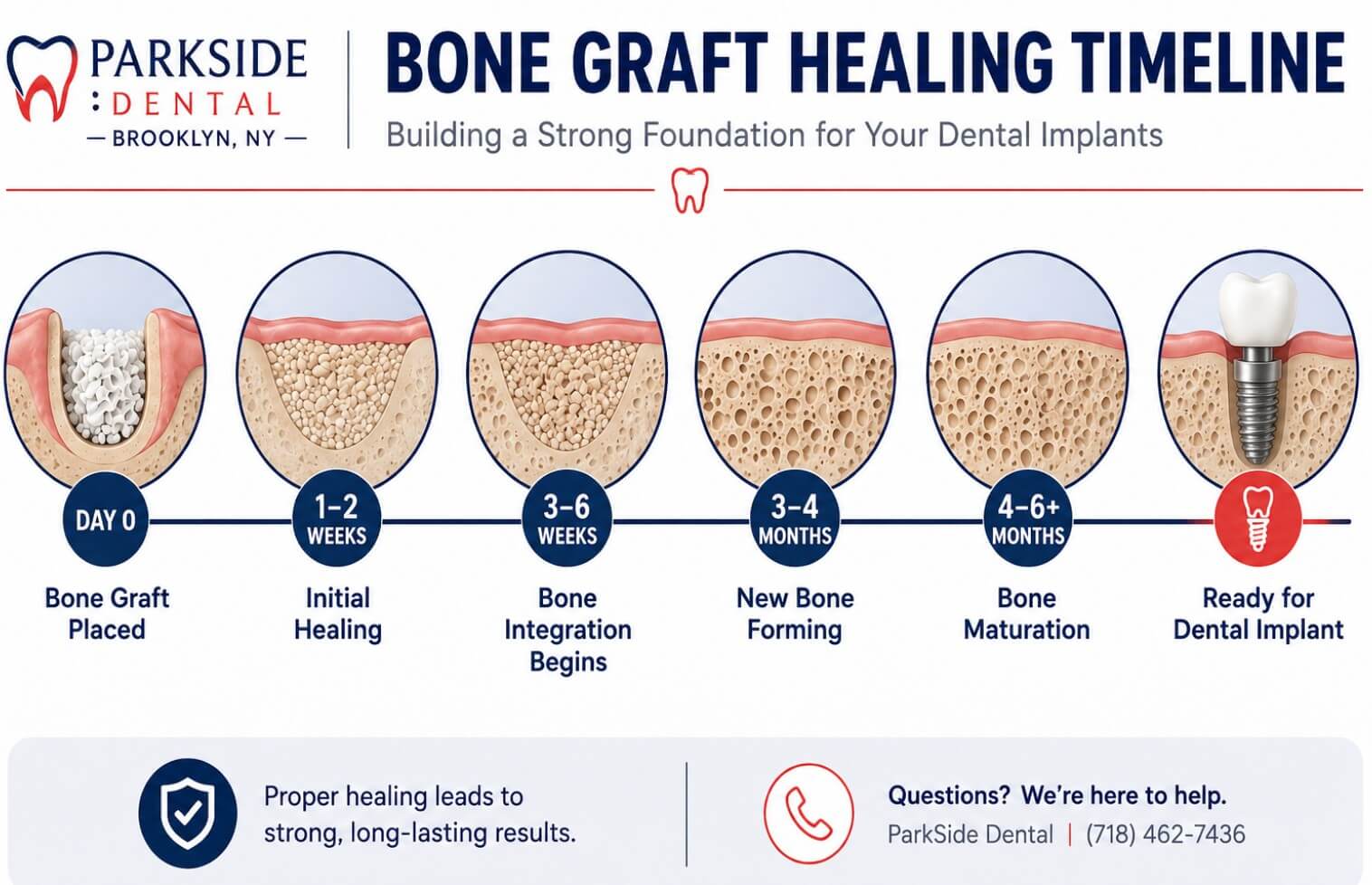
Bone graft healing timeline showing the stages from graft placement through bone integration and readiness for dental implant treatment.
Many grafts require several months of healing before implant placement.
The existing ParkSide Dental guidance describes a commonly expected healing interval of approximately 3 to 6 months before implant placement in cases where a separate grafting stage is needed.
That is not a fixed rule. Healing time depends on graft size, location, material, patient health and whether implant placement occurs simultaneously with the graft.
ParkSide Dental currently lists bone grafting starting at $300.
The final cost may depend on the amount of grafting needed, material used, whether a tooth is extracted at the same visit, imaging, implant planning and whether additional procedures are required.
With insurance: Some dental plans may provide benefits for grafting when it is associated with covered treatment, while other plans exclude or limit grafting connected to dental implants.
Without insurance: Self-pay patients can use ParkSide Dental’s published starting price and receive an individualized estimate based on the planned procedure.
Protecting the graft site during early healing is important.
Softer foods that require minimal chewing are commonly more comfortable during early recovery.
Try not to chew directly on the grafted area until your dentist says it is safe.
Oral hygiene instructions may be modified temporarily around the surgical site.
Follow-up allows the dentist to evaluate soft-tissue healing and future implant timing.
Every surgical procedure has potential risks and healing can vary.
Possible complications can include infection, delayed healing, graft exposure, inadequate bone formation, bleeding, swelling or discomfort. The specific risks depend on the location and type of procedure.
Call the dental office if pain or swelling is worsening instead of improving, you develop fever, drainage, persistent bleeding, graft material is visibly exposed, or you are concerned about the way the area is healing.
Imaging can help determine whether grafting is needed and where the implant should be positioned.
Dental X-rays and, when appropriate, CBCT imaging can help evaluate available bone, tooth roots and nearby anatomical structures before implant-related surgery.
Learn more about 3D dental and jawbone imaging in Brooklyn.
Brooklyn is our primary location and focus. ParkSide Dental is located at 325 Ocean Ave, Brooklyn, NY 11225, near Prospect Park and Prospect Lefferts Gardens. We also see patients from Flatbush, Crown Heights, Kensington, Ditmas Park, Windsor Terrace and surrounding Brooklyn neighborhoods.
Languages spoken: English, Spanish, Russian and Ukrainian.
Cost, implants, healing, eating and questions patients commonly ask before dental bone grafting.
ParkSide Dental currently lists bone grafting starting at $300. The final fee depends on the size of the graft, materials, imaging and whether other treatment is performed at the same visit.
Coverage varies. Some plans may provide benefits when grafting is associated with covered dental treatment, while implant-related grafting may be limited or excluded. The office can review available insurance information.
Not necessarily. Bone grafting is recommended only when the planned implant site does not have enough bone to support the implant or when bone preservation is important for future treatment.
Soft-tissue recovery may occur within weeks, while deeper graft integration usually takes several months. The existing ParkSide guidance describes approximately 3 to 6 months in many staged implant cases.
Sometimes. If the implant can achieve sufficient stability and the bone deficiency is appropriate for simultaneous grafting, both procedures may be performed during the same treatment stage.
Softer foods are commonly recommended during early healing. Avoid chewing directly on the grafted area and follow the specific postoperative instructions provided by the dentist.
The area is numbed for the procedure. Tenderness and swelling can occur afterward, and the amount varies depending on the size and location of the graft.
The dentist may evaluate the site with examination and imaging and determine whether additional healing time, treatment or repeat grafting is needed.
Yes, if the implant site already has enough healthy bone in the correct location. The need for grafting is determined during implant planning.
Call if you have worsening pain or swelling, persistent bleeding, fever, drainage, visible graft exposure or another symptom that concerns you.
Getting started is simple.
Call (718) 462-7436 and tell our team you are considering a dental implant, have been told you need a bone graft, or recently lost a tooth.
Use our online appointment request and briefly describe the tooth or implant area you want evaluated.
ParkSide Dental is located at 325 Ocean Ave, Brooklyn, NY 11225, near Prospect Park.
Dr. Anton Moskalenko, DDS can evaluate the area, review imaging when needed and explain whether bone grafting is necessary before or during implant treatment.
What to bring: Bring your insurance information, medication list and any recent dental X-rays or implant records if available.
Dental implant and bone grafting evaluation at ParkSide Dental in Brooklyn.
Dr. Anton Moskalenko, DDS provides comprehensive dental care at ParkSide Dental and evaluates patients who may need bone grafting as part of dental implant or tooth-replacement treatment.
The treatment plan is based on the amount and location of available bone, the future implant position and the restorative goal for the missing tooth or teeth.

If you are considering a dental implant and are concerned about bone loss, an examination and imaging can help determine whether bone grafting is needed and when implant treatment can begin.
ParkSide Dental
325 Ocean Ave
Brooklyn, NY 11225
English • Spanish • Russian • Ukrainian spoken
We Are Right Around The Corner When You Need Us